The Last Mile of the Grid Is a Connection Fee, Not a Power Line
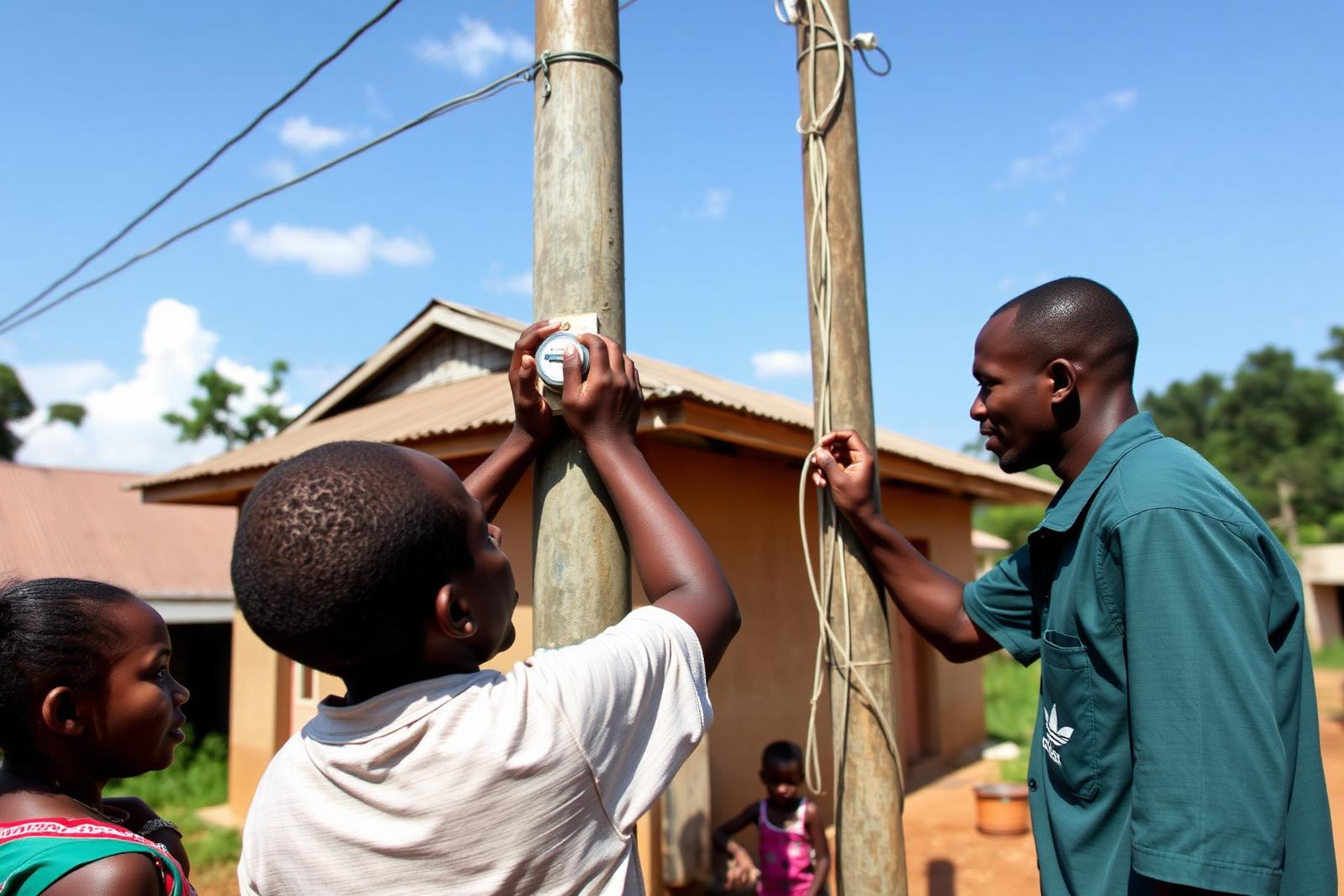
Poles pass the compound. The wiring, meter and inspection are what keep the lamp off.
By Moses Ekwaru..Eastern Uganda.5 min read
Eastern Uganda. 6 June 2026.
MixedEnergy & Infrastructure
In several trading centres the line has been overhead for years. Beneath it, households light with paraffin and charge phones commercially at fifty shillings a time.
Where the cost sits
Internal wiring, the ready board, the meter and the inspection add up to more than most rural households hold in cash at any point in the year. Instalment options are poorly understood at village level.
"
The power is above my roof. The money to bring it inside is what I do not have.
Homeowner, eastern Uganda
Where connection subsidies have been applied consistently, uptake rises quickly, and consumption settles at a level that makes the connection economic for the distributor within a few years.
Field Dispatches
Get our weekly regional audits in your inbox
One email a week from the Kampala, Busia, Hoima and Jinja desks. What we checked, what we saw at the site, and what is still not adding up.
Why the subsidy design matters more than the subsidy size
The Electricity Regulatory Authority has supported connection subsidy schemes intended to cover part of the internal wiring, meter and inspection cost that keeps many households under a distribution line unconnected. Utility staff say uptake responds strongly to how the subsidy is administered locally, with schemes that use mobile registration teams achieving far higher connection rates than those requiring households to travel to a district office to apply.
Once connected, household consumption tends to rise gradually as families invest in additional appliances, which utility planners say eventually makes the connection commercially viable for the distributor, even though the initial subsidised connection represents a short-term cost.
"
Once the light is on, people find money for a second bulb, then a fridge for cold drinks to sell. The connection pays for itself, just not on day one.
Utility field officer, eastern Uganda
Awareness of available subsidy schemes is still uneven at village level, and utility officials admit that households under a line for years sometimes simply do not know a subsidised connection option exists, relying instead on word of mouth from a neighbour who has already connected.
The Ministry of Energy has cited last-mile connection rates as a specific target distinct from grid extension length, a shift officials say reflects a recognition that a line passing overhead is not the same achievement as a household actually connected to it.
Evidence & documents
Every claim above is checked against the records below. Open each one to see where it comes from.