Water Hyacinth and Enforcement Squeeze Lake Kyoga's Fishing Villages
Landing sites face a weed that blocks access and a licensing regime that punishes the smallest boats hardest.
By Moses Ekwaru..Lake Kyoga basin.5 min read
Lake Kyoga basin. 18 July 2026.
MixedFood & Livelihoods
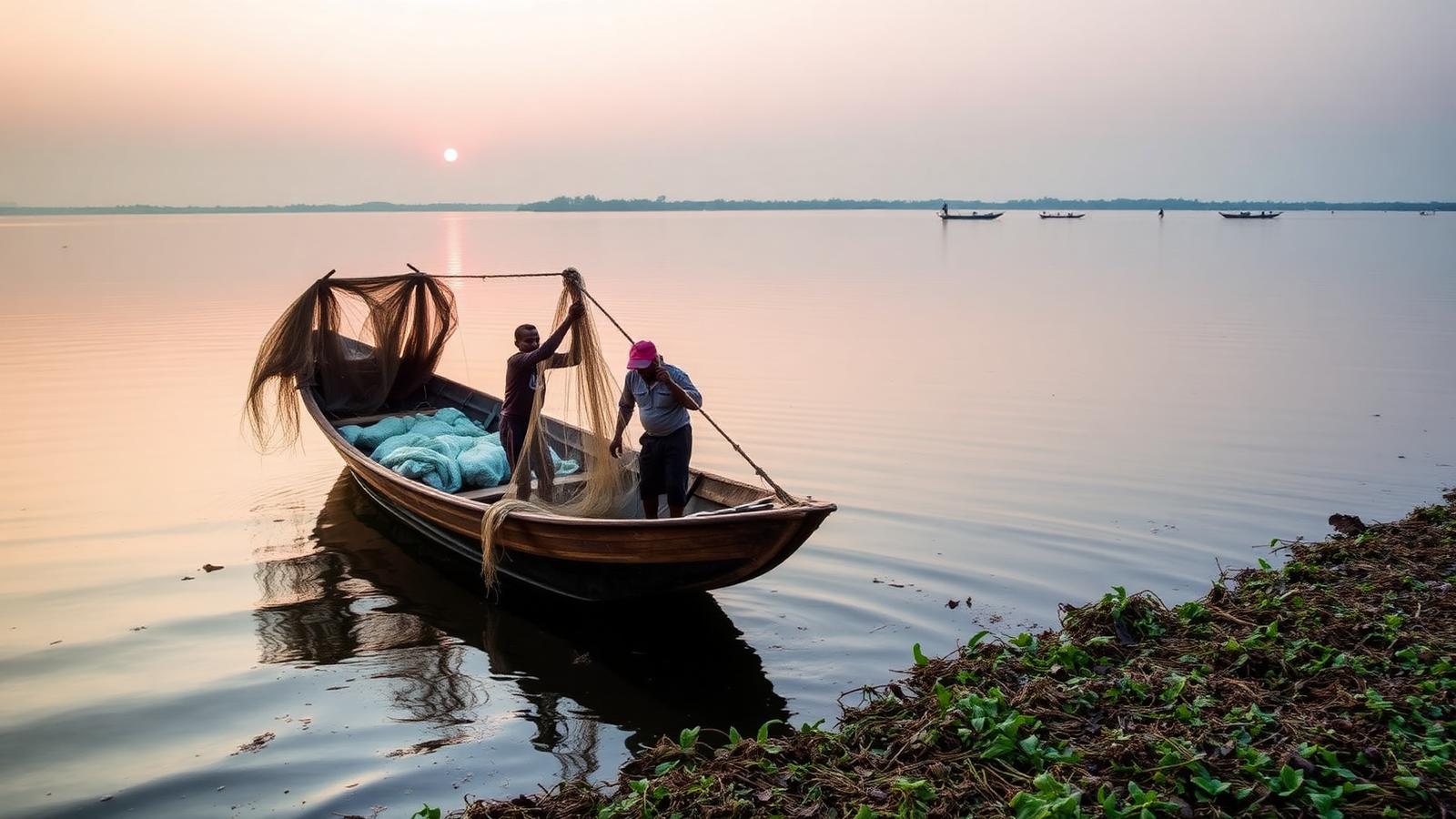
At several landing sites the first hour of the day is not fishing. It is clearing a path through hyacinth thick enough to hold a boat in place.
Two pressures, one household
Stock protection rules have restored catch sizes in parts of the basin. They have also concentrated the cost on crews without the capital to replace non-compliant gear, who exit the trade rather than upgrade.
"
We agree with the rules. We cannot agree with paying for them alone.
Boat owner, Lake Kyoga landing site
Local leaders are asking for gear replacement credit alongside enforcement, and for mechanical weed clearing at the sites where access is worst.
Field Dispatches
Get our weekly regional audits in your inbox
One email a week from the Kampala, Busia, Hoima and Jinja desks. What we checked, what we saw at the site, and what is still not adding up.
Enforcement without a bridge to comply
Fisheries protection units patrolling Lake Kyoga have targeted undersized mesh nets as the primary driver of stock decline. Catch data at several landing sites does suggest recovery where enforcement has been sustained. The difficulty, local leaders say, is that compliant gear costs more than many small-scale operators can raise without credit. No formal gear-exchange scheme has reached most of the basin's landing sites.
Water hyacinth adds a second and largely separate cost. Mechanical clearing equipment exists at a handful of larger landing sites, but community leaders in smaller villages say they are left to clear channels by hand, a task that consumes fishing hours without any compensation.
"
Enforcement takes our old nets. The hyacinth takes our morning. Nobody has offered to solve either one for free, and we cannot afford both.
Fisherfolk association member, Lake Kyoga basin
District fisheries officers argue the stock recovery, where it is occurring, ultimately benefits the same small operators being squeezed in the short term. And thatabandoning enforcement now would reverse gains made over several seasons of restricted gear use.
The proposal gaining the most traction among local leaders is a revolving gear-loan fund tied to landing site associations, modelled loosely on savings groups already operating informally at several sites. Even so,it has not yet secured a funder willing to capitalise it at scale.
Evidence & documents
Every claim above is checked against the records below. Open each one to see where it comes from.
01Ministry of Agriculture, Animal Industry and Fisheries▾