Bugisu is among the most disaster-prone sub-regions in Uganda. Steep cultivated slopes, heavy seasonal rain and thin topsoil have produced a landslide record that residents can recite by year. A restoration project running inside and around Mount Elgon National Park is attempting to change that arithmetic, and this month it is being assessed on results rather than intentions.
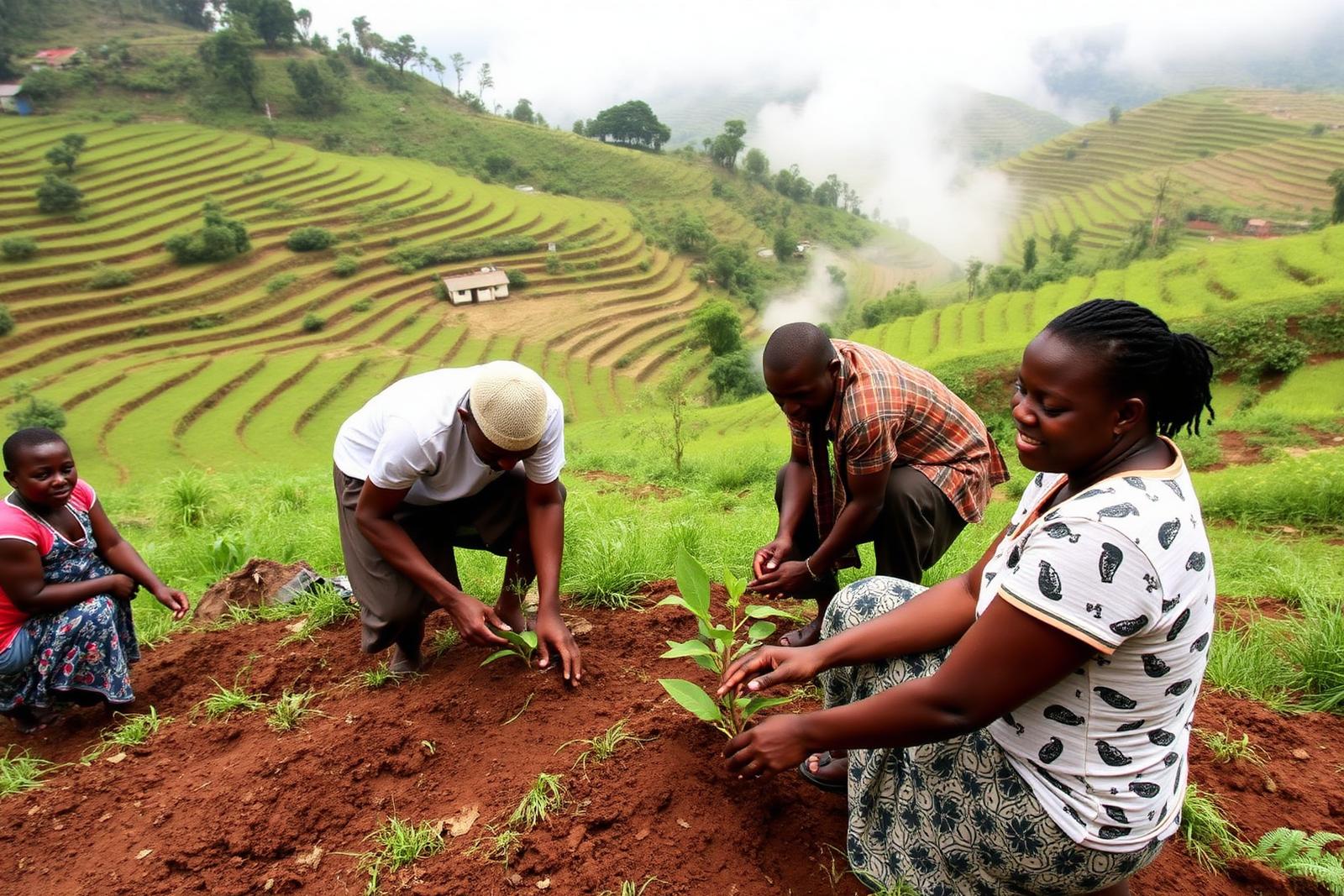
Reporting from Bulambuli this week describes communities in Bumugibole and Masira sub-counties planting inside the park boundary alongside government and private partners, with the stated aims of restoring ecosystems and strengthening food security. Both aims matter here because the same slope that fails in a storm is the slope a family farms.
Why restoration and farming are the same argument
Conservation officers make a straightforward technical case: root systems hold soil, canopy slows rainfall, and the combination reduces the shear pressure that starts a slide. Farmers make an equally straightforward economic one: land under trees is land not under maize or beans this season. Projects that ignore the second argument tend to see seedlings quietly cleared.
The design being used in Bulambuli tries to answer both by favouring species that produce fodder, fruit or fuelwood, so a planted plot returns something to the household within a few years. Where that has been done well elsewhere in the region, survival rates have been markedly higher than in plain reforestation.
If a tree feeds my goats or gives me firewood, I will guard it. If it only serves the park, my neighbour will cut it.