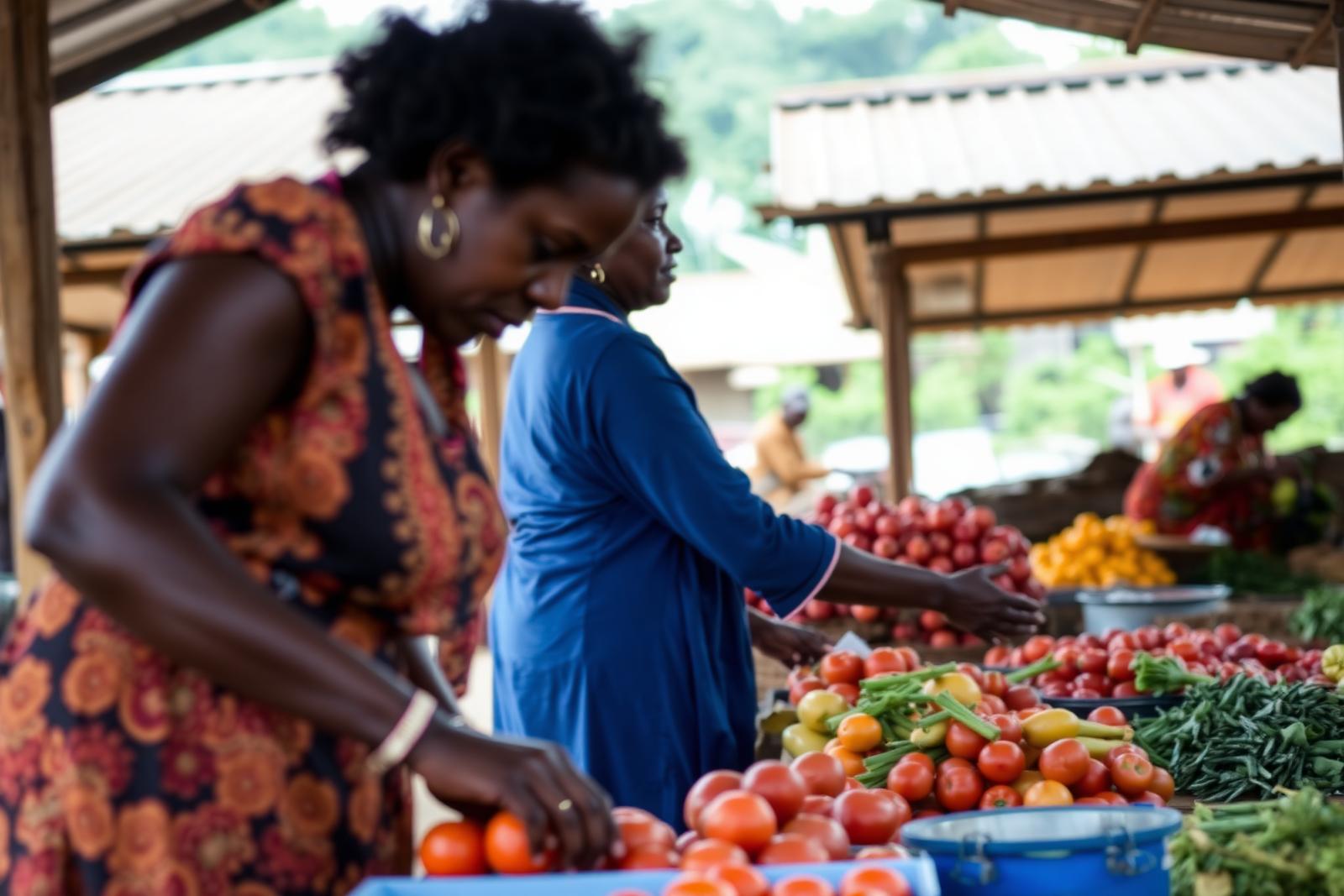
We reached the market before six in the morning, when the lorries are still off-loading and the price of a box of tomatoes is decided for the whole day. By eight the collector has passed. By midday most of the women we sat with had paid their ticket and were still counting to see whether the day would leave them anything.
This is not a story about a new fee. On paper the daily rate in the three markets we visited has not moved much this year. What has moved is what the buyer carries in her hand. Vendors told us the same sentence in three different places: the fee is the same, the customers are fewer, so the fee feels bigger.
The arithmetic of one stall
One vendor showed us her book. She buys stock in the morning, she pays the daily ticket, she pays a small charge for the person who watches the stall at night, and she pays transport twice. On a good day what remains is enough for food and a bit for school requirements. On a slow day the ticket eats the profit and she goes home with the stock she started with, which for tomatoes means loss, not stock.
That is the part outsiders miss. A trader in perishables cannot wait for a better market day. The vegetable decides the deadline, not the trader.
The ticket is small if you sell. If you do not sell, the ticket is the only thing that is certain in the day.
Receipts, and the ones that are missing
Where the collection is orderly, vendors did not complain much. They complained where there is no paper. Several sellers told us they pay and receive nothing written, and then a second person comes later and asks again. We could not verify each of those cases, so we report them as complaints, not as findings. But we heard the same complaint in two markets from people who do not know each other.